
The Balangay Returns to Subic Bay—and Brings a Bigger Challenge with It


Somewhere along the Pasig River, a traditional Filipino vessel is helping tell two stories at once.
The first is the story of who we were.
Long before roads connected our islands, Balangays carried our ancestors across the seas. These vessels supported trade, exploration, community-building, and the growth of a maritime culture that helped shape our identity as Filipinos.
The second story is about the environmental reality we face today.
The Balangay Florentino Das, the largest and most modern vessel in Art Valdez’s Balangay fleet, has been serving as a floating cultural and educational attraction connected with the Pasig River Esplanade.
But its presence there has also revealed the condition of the river itself.

According to expedition leader Art Valdez, the vessel was designed for open-sea voyages, yet it must regularly contend with garbage and debris that can clog and damage its cooling system.
The Balangay is therefore doing more than preserving history.
It is bearing witness.
It reminds us that the rivers and seas that once carried our ancestors now carry the consequences of how we produce, consume, and discard materials.
And perhaps that is why its story matters so much today.
The Balangay Returns to Subic Bay

On August 29–30, 2026, the Balangay Florentino Das is expected to return to Subic Bay for the National Heroes Day Regatta, the second chapter of the Sailing for Nation & Nature Sustainability Series.
The event carries the theme:
MODERN-DAY HEROES
Inspired by Our Past. Sailing Toward a Better Future.
The weekend will bring together yacht racing, the Balangay, youth sailing, a coastal cleanup and data-gathering activity, circularity exhibits, recycling demonstrations, film screenings, a boat parade, and a two-day Sustainability Forum.
Day 1, From Heritage to Stewardship, will feature leaders in maritime heritage, marine science, environmental engineering, and education.

Day 2, Stewardship in Action: The Solutions Marketplace, will introduce enterprises and practitioners already working on packaging, composting, upcycling, plastic recovery, river interception, community restoration, and circular innovation.

This is intentional.
We want participants to move from inspiration to implementation—from understanding why our heritage and oceans matter to discovering practical ways to protect them.
The broader series is built on a simple idea:
Experience creates connection. Connection inspires stewardship.
Sailing allows people to experience the ocean rather than merely hear about its problems.
Maritime heritage reminds us that the Filipino identity has always been linked to the sea.
Science helps us understand the challenges before us. Circular economy solutions give people and organizations practical ways to act.
Sailing for Nation & Nature Series
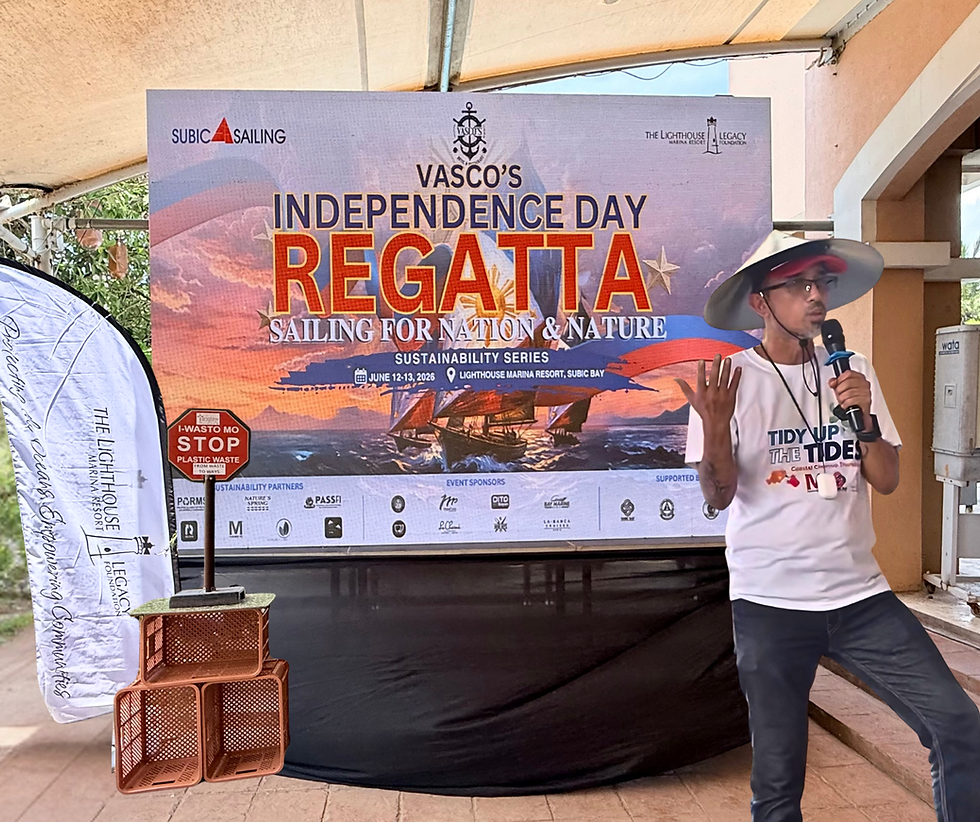
The Sailing for Nation & Nature Series began during the Independence Day Regatta last June.

What started as a sailing event became a meeting place for sailors, businesses, government agencies, educators, sustainability innovators, environmental organizations, communities, students, volunteers, and families.
The program combined sailing with coastal action, sustainability exhibits, maritime storytelling, educational talks, and the launch of a community collection hub.

It demonstrated that sustainability becomes more meaningful when people can see it, experience it, and participate in it.
The Circularity Village was especially important. Instead of presenting environmental problems alone, it showcased existing solutions: recycled plastic applications, sustainable furniture, collection technologies, composting, community enterprises, and products made from recovered materials.
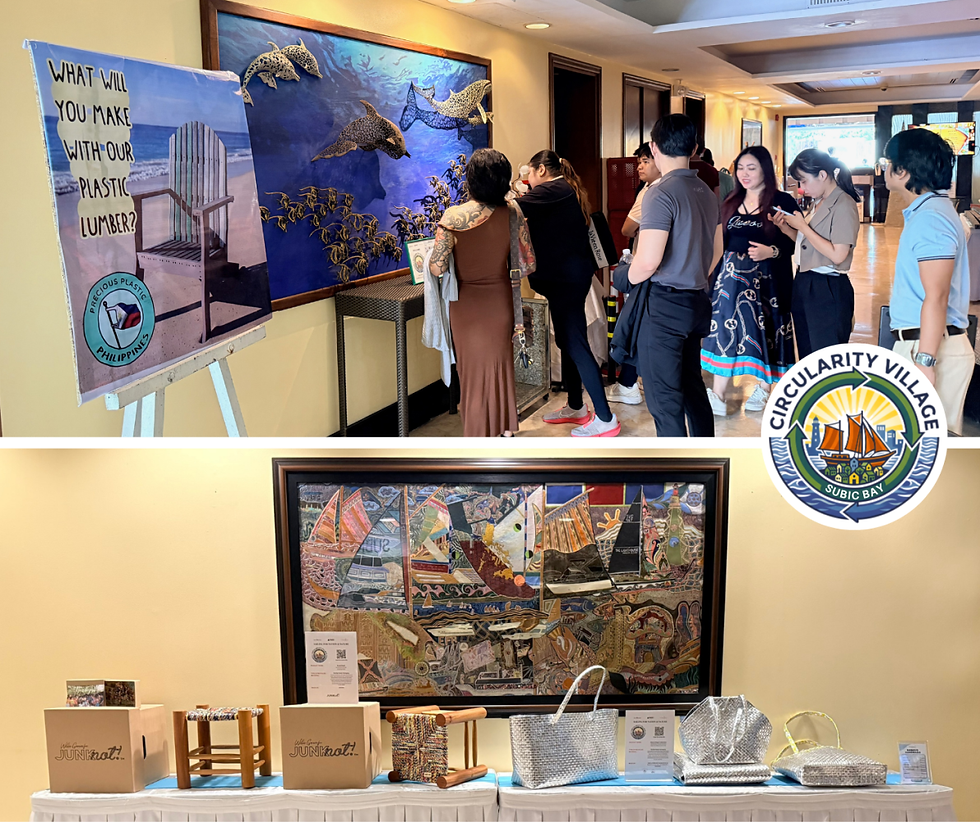
The National Heroes Day Regatta will build on that foundation with a stronger program, a wider speaker lineup, more public engagement, and the return of the Balangay.
But the journey should not end with another successful event.
The Next Balangay
When I visited the Florentino Das earlier this year, I was reminded that even tradition must adapt.
Quality wood is becoming harder to source. Traditional materials face limits in durability and availability. At the same time, plastic waste continues to leak into our cities, rivers, coastlines, and oceans.
For quite some time, we have been thinking: what if the next Balangay could be built using recovered plastic?
The idea may sound ambitious.
That is precisely why it matters.
A recycled-plastic Balangay would connect several stories that are often discussed separately:
Filipino maritime heritage
Plastic recovery and recycling
Materials innovation
Community collection
Engineering and design
Environmental education
National pride
Every kilogram of plastic recovered for the project could become part of something larger, not simply diverted waste, but a physical symbol of transformation.
The same material that might otherwise enter a river or ocean could become part of a vessel designed to inspire people to protect those waters.

The Sailing for Nation & Nature concept identifies this as its flagship legacy project: an effort to build the Philippines’ first Balangay using recycled plastic materials recovered through community collection programs.
Where Brands Can Make a Difference
This is where businesses can play a meaningful role.
We are not looking only for companies willing to place their logos on an event.
We are looking for organizations prepared to help build the systems behind the story.

A partner could help:
establish collection and recovery programs;
support materials research and engineering;
develop traceability and impact measurement;
sponsor youth sailing and environmental education;
demonstrate responsible packaging and procurement;
activate employees and communities;
showcase circular products and technologies;
support the design and construction of the recycled-plastic Balangay.
For companies with commitments in sustainability, packaging, waste recovery, community development, tourism, education, or Extended Producer Responsibility, this platform offers something more enduring than conventional sponsorship.
It offers the opportunity to show how environmental commitments can become a public experience and ultimately, a national symbol.
The National Heroes Day Regatta is designed as a living demonstration platform where sustainability solutions are not only discussed but experienced through collection systems, exhibits, education, volunteering, and measurable impact reporting.


An Invitation to Help Build the Next Chapter
The Balangay once connected our islands.
Today, it may help connect our heritage with the environmental solutions our country urgently needs.
On August 29 and 30, the Florentino Das will help us honor the past in Subic Bay.
But our greater ambition is to build what comes next:
A new Balangay.
Made from recovered plastic.
Built through Filipino ingenuity.
Supported by communities and responsible businesses.
Designed not merely to sail, but to tell a story of what becomes possible when heritage, innovation, and stewardship move in the same direction.
We invite companies, institutions, engineers, recyclers, designers, educators, and environmental advocates to help us take this project from vision to reality.
Because the most meaningful tribute we can offer our heroes is not simply to remember what they built.
It is to accept responsibility for what we build next.
Protect the Ocean. Preserve Our Heritage. Leave a Legacy of Stewardship.



Comments